Integrating Elegant Romance Poster Decor Patterns into Professional Design Workflows
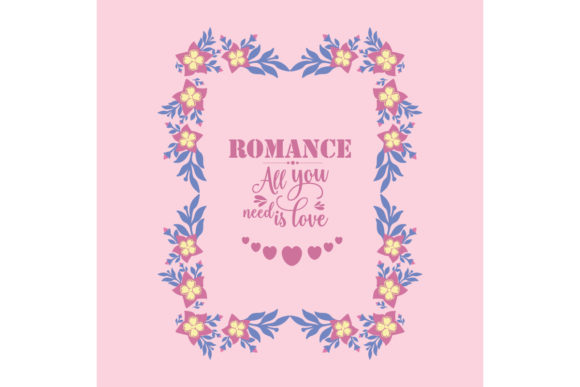
The Elegant Romance Poster Decor Pattern serves as a foundational visual asset for designers, marketers, and content creators seeking to establish a sophisticated aesthetic without building complex illustrations from scratch. This specific vector illustration, characterized by ornamental leaves and pink floral frames, functions as more than mere decoration; it is a structural element that defines negative space, guides viewer attention, and establishes thematic consistency across various media. For professionals managing tight deadlines or extensive brand guidelines, understanding how to leverage this pattern effectively can streamline production while maintaining high visual standards.
In the broader context of graphic design and digital publishing, this type of decor pattern acts as a reusable template component. Rather than treating it as a standalone image, experienced users integrate it into master libraries within software like Adobe Illustrator, Affinity Designer, or Canva. This approach transforms a static decorative element into a dynamic tool that supports everything from wedding stationery and event marketing to feminine branding packages and editorial layouts. The vector format ensures that the intricate details of the leaf ornaments and floral borders remain crisp whether applied to a business card or a large-format banner, making it a versatile resource in any creative arsenal.
Pre-Production Planning and Asset Preparation
Successful implementation of the Elegant Romance Poster Decor Pattern begins before the design phase starts. Preparation involves assessing technical compatibility and establishing organizational protocols to ensure the asset integrates smoothly with existing workflows. Because this is a vector illustration, verifying the file structure is the first practical step. Users should confirm that paths are closed, layers are logically named, and color modes align with the intended output. A pattern designed for print requires CMYK color profiles to prevent unexpected shifts in the pink floral tones, whereas digital-first projects may benefit from RGB optimization for screen vibrancy.
Organization plays a critical role in long-term usability. Professionals should categorize this asset within their digital asset management (DAM) systems using semantic tags such as "romantic border," "floral frame," "vintage ornament," and "wedding vector." Proper tagging reduces retrieval time during active projects. Additionally, creating derivative versions of the master file can save significant time later. Consider saving isolated elements—such as just the corner leaf clusters or the central floral motif—as separate symbols or components. This modularity allows for rapid assembly of custom layouts without repeatedly editing the original complex artwork.
- Color Profile Verification: Ensure the vector file matches the project’s color space (CMYK for print, RGB for web) to maintain color integrity.
- Layer Management: Rename generic layer names to descriptive labels like "Left Floral Border" or "Background Texture" for easier navigation.
- Symbol Creation: Convert repetitive elements into symbols to reduce file size and allow global updates across multiple artboards.
- Licensing Check: Verify usage rights for commercial vs. personal applications before integrating into client deliverables.
Active Integration During the Creative Process
During the execution phase, the Elegant Romance Poster Decor Pattern should function as a guide for composition rather than an afterthought. The ornate nature of the leaf and pink floral frame creates natural boundaries that dictate text placement and hierarchy. Designers can use the curves of the ornamentation to create optical flow, leading the eye toward the center of the poster or towards key information like dates, headlines, or calls to action. This interaction between the decorative frame and the typographic content is where the pattern delivers its highest value, transforming empty space into intentional design.
Customization is essential to avoid a generic appearance. While the base vector provides structure, modifying stroke weights, adjusting opacity, or recoloring specific floral elements helps tailor the pattern to specific brand identities. For example, a luxury skincare brand might mute the pinks to a dusty rose and increase line thickness for a bold, modern look, while a wedding planner might retain the original palette but add a subtle gradient overlay for softness. These adjustments ensure the Elegant Romance Poster Decor Pattern feels bespoke rather than stock. Furthermore, utilizing blending modes such as Multiply or Overlay can help the pattern interact seamlessly with background textures or photography, adding depth without overwhelming the primary message.
Efficiency during this stage also depends on software interoperability. If working across multiple platforms, ensure the vector scales correctly when imported. Some layout programs may rasterize vectors upon import, degrading quality. Maintaining a linked vector file or using native vector tools within the layout application preserves editability. For teams collaborating on shared files, establishing clear conventions for how the pattern is locked or protected prevents accidental modifications that could derail the design system.
Balancing Ornamentation with Readability
A common challenge when using elaborate frames is maintaining accessibility and legibility. The intricate details of the Elegant Romance Poster Decor Pattern can compete with body copy if not managed carefully. Practical application requires testing contrast ratios and ensuring sufficient padding between the ornamental edges and text blocks. The frame should enhance the content, not obscure it. In user interface design or web posters, this also means considering responsive behavior; a fixed-width floral border may need to be cropped or simplified on mobile viewports to preserve the central content area.
Post-Project Application and Quality Control
The utility of the Elegant Romance Poster Decor Pattern extends beyond the initial project completion. Post-production workflows involve archiving modified versions and documenting usage guidelines to maintain consistency in future campaigns. When delivering files to clients or printers, outlining fonts and expanding appearances related to the pattern prevents rendering issues. However, keeping an editable master copy is vital for future iterations. Documenting which color variations were used for specific clients helps maintain brand continuity and speeds up reorders or seasonal updates.
Quality control checks should specifically target the reproduction of fine vector lines. In print production, extremely thin strokes in the leaf ornaments may disappear or break up depending on the paper stock and printing method. Conducting press proofs or digital mockups on the intended substrate verifies that the elegance of the pattern translates physically. For digital outputs, checking file size is equally important; complex vectors can bloat SVG or PDF files, impacting load times. Simplifying paths or removing hidden anchor points in the post-design phase optimizes performance without sacrificing visual fidelity.
- Archive Master Files: Store unflattened, layered source files in a centralized location for future access.
- Create Usage Guidelines: Document acceptable color modifications, minimum sizing, and clearance zones for the pattern.
- Optimize for Output: Run path simplification scripts to reduce node count for web use or verify stroke widths for print safety.
- Gather Feedback: Track audience engagement or client satisfaction related to the visual style to inform future asset selection.
Strategic Considerations for Long-Term Use
For entrepreneurs and small business owners, investing time in mastering assets like the Elegant Romance Poster Decor Pattern yields compounding returns. It reduces reliance on expensive custom illustration for every new campaign while providing a cohesive visual thread across touchpoints. The key is viewing the pattern as part of a larger design system rather than a one-off solution. By establishing standard operating procedures for its use, teams can produce high-quality romantic or vintage-themed content at scale.
Compatibility with emerging tools and platforms also warrants consideration. As design moves toward AI-assisted workflows and generative fill tools, having clean, well-structured vector assets serves as excellent training data or reference material. The defined shapes of the pink floral frame can act as masks for AI-generated imagery, combining traditional vector precision with modern generative capabilities. Staying adaptable in how this asset is deployed ensures it remains relevant as technology evolves.
Ultimately, the effectiveness of the Elegant Romance Poster Decor Pattern lies in its disciplined application. It bridges the gap between artistic expression and functional design, offering a ready-made framework that supports both creativity and efficiency. Whether used for a single event poster or as a cornerstone of a comprehensive brand identity, its value is realized through thoughtful preparation, strategic customization, and rigorous quality management. Professionals who treat this vector illustration as a workflow enabler rather than just a decorative object will find it significantly enhances both their process and their final output.