Watercolor Olives Set: Elevating Design with Hand-Painted Botanical Elements
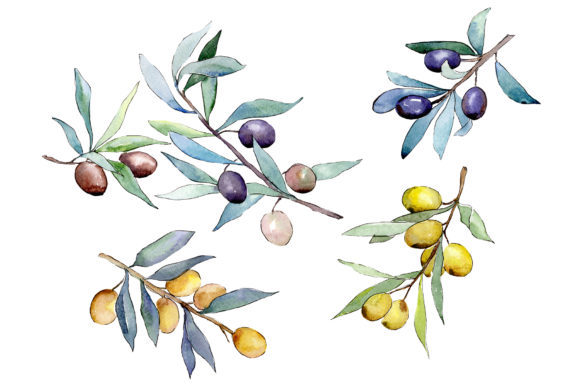
There is a distinct warmth to hand-painted botanical art that digital vectors simply cannot replicate. When you are working on a project that requires an organic, authentic touch, the Watercolor Olives Set provides a versatile solution for creators who value texture and natural imperfection. This collection features five separate files depicting olive branches and fruit, rendered in traditional aquarelle style and digitized as high-resolution PNGs. Because each element is isolated on a transparent background, these illustrations function less like static clip art and more like flexible design assets that can be layered, resized, and integrated into virtually any creative workflow.
The technical specifications matter significantly when choosing digital art for professional or personal use. Each file in this pack measures 3500x3500 pixels at 300 DPI, ensuring that the brushstrokes remain crisp whether you are designing a small wedding favor tag or a large-format poster. The green foliage and colorful plant details retain their vibrancy without pixelation, making them suitable for both screen-based projects and high-quality print materials. Understanding how to leverage these specific qualities allows users to move beyond simple decoration and create cohesive visual identities.
Wedding Stationery and Event Branding
The olive branch has long symbolized peace, harmony, and new beginnings, making it a perennial favorite in the wedding industry. However, modern couples often want to avoid generic, mass-produced imagery. For stationery designers and DIY brides, this watercolor olives PNG set offers a way to create bespoke invitations that feel intimate and handcrafted. You might place a single, sweeping branch across the top of an invitation suite to frame the text, or use smaller, isolated olives as corner accents on menu cards and table numbers.
Beyond invitations, consider the broader event ecosystem. Wedding websites often lack personality, but adding these botanical elements as section dividers or header backgrounds can tie the digital experience to the physical stationery. For destination weddings in Mediterranean locations, these graphics reinforce the theme authentically rather than relying on cliché stock photography. The transparent background is crucial here; it allows the olive branches to sit seamlessly over colored cardstock, textured paper backgrounds, or dark digital themes without awkward white boxes disrupting the aesthetic.
Commercial Packaging and Product Labels
Small business owners in the culinary, beauty, and wellness sectors frequently struggle with packaging that looks professional yet artisanal. If you are selling olive oil, natural skincare, herbal teas, or gourmet foods, the visual language of your label communicates quality before the customer even reads the ingredients. The Watercolor Olives Set serves as excellent raw material for product labeling. A detailed branch can wrap around a jar label, suggesting freshness and natural sourcing.
Because the files are fully editable in size and color, entrepreneurs can adapt the palette to match their specific brand identity. Perhaps your brand uses muted sage tones instead of vibrant greens; these PNGs can be adjusted in Photoshop or Procreate to align perfectly with your existing color scheme. This flexibility is vital for maintaining brand consistency across different product lines. Furthermore, the hand-painted nature of the illustrations signals to consumers that the product inside is crafted with care, distinguishing it from competitors using sterile, corporate-style vector graphics.
Digital Content Creation and Blogging
Content creators, bloggers, and social media managers face the constant challenge of breaking up text-heavy posts while maintaining a unique visual style. Stock photo sites are saturated with similar images, which can make a blog or Instagram feed feel impersonal. Integrating watercolor botanical elements offers a refreshing alternative. These olive illustrations work exceptionally well as overlay elements on quote graphics, Pinterest pins, or YouTube thumbnails.
For food and lifestyle bloggers, these assets provide a non-distracting way to add visual interest to recipe posts or travel journals. Instead of competing with your main photography, the translucent quality of watercolor complements it. You can use the branches to create custom frames for featured images or as subtle textures behind sidebar widgets. The 300 DPI resolution ensures that even when cropped for social media stories or reels covers, the details remain sharp. This level of polish helps elevate amateur content to a professional standard without requiring advanced illustration skills.
Educational Resources and Printables
Educators, homeschoolers, and digital product sellers on platforms like Etsy or Teachers Pay Teachers can utilize this set to create engaging learning materials. Botanical themes are popular in nature studies, biology units, and language arts curriculums. The isolated PNG format makes it easy to incorporate these olives into worksheets, flashcards, and classroom decor. A teacher might use the branch illustrations to border a poetry analysis sheet or as decorative elements in a science journal template.
For those selling digital downloads, such as printable planners or wall art, originality is key to standing out in a crowded marketplace. Using hand-painted elements like these adds perceived value to digital products. Customers are often willing to pay more for resources that feature genuine artwork rather than traced vectors. The ability to edit colors means you can create seasonal variations—brighter greens for spring collections or deeper, warmer tones for autumn harvest themes—all from the same base set of five files.
Practical Considerations Before Use
While the Watercolor Olives Set is highly versatile, getting the best results requires some practical forethought. First, ensure your software supports transparent PNG layers effectively. While basic tools can handle these files, programs like Adobe Photoshop, Affinity Photo, or Procreate offer better control over blending modes and color adjustments. If you plan to print, always verify your printer’s color profile; watercolors can sometimes shift between RGB (screen) and CMYK (print), so doing a test print is advisable for large commercial runs.
Consider composition and negative space. Since these are isolated elements, they rely on your layout skills to look natural. Avoid stretching the images disproportionately, as this distorts the brushwork and reveals the digital nature of the file. Instead, rotate or scale uniformly. Also, think about licensing if you intend to use these for commercial products. Always verify that your purchase includes commercial rights, especially if you are incorporating the olives into physical goods for resale or digital templates for distribution.
Finally, remember that watercolor is inherently textured. When placing these elements over complex backgrounds, check for contrast issues. The delicate edges of the leaves may get lost against busy patterns. Sometimes, adding a subtle drop shadow or a light outer glow can help lift the botanical element off the background, enhancing readability and depth. By treating these files as premium artistic components rather than disposable clip art, you unlock their full potential to transform ordinary projects into something truly memorable.